


Flexible Intermediate Bulk Containers (FIBCs), commonly known as bulk bags, are widely used to store, handle, and transport dry bulk materials across industries. As packaging requirements evolve, manufacturers and buyers are increasingly looking beyond a bag’s immediate performance and considering what happens throughout its lifecycle.
This is where circular design in bulk bag manufacturing becomes relevant.
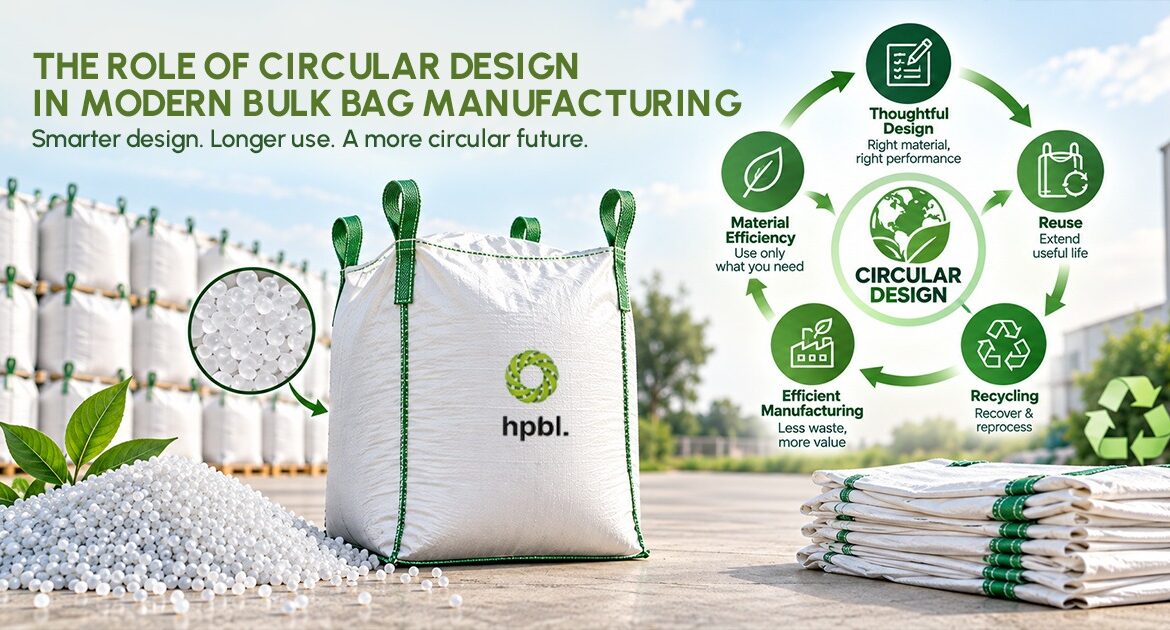
Instead of treating a bulk bag as a product that is manufactured, used, and eventually discarded, circular design considers material efficiency, potential reuse, recyclability, production waste, and end-of-life recovery from an earlier stage. The objective is not simply to make a bag more sustainable, but to consider how design and manufacturing decisions can support a more circular use of materials while maintaining the performance required for the application.
What Is Circular Design in Bulk Bag Manufacturing?
Circular design is an approach that considers a product’s entire lifecycle during the design and manufacturing process.
In a traditional linear model, materials are extracted, converted into products, used, and eventually discarded. A circular approach instead looks for opportunities to keep materials and products in use for longer through appropriate reuse, recovery, recycling, or reprocessing.
For bulk bags, this can involve decisions about the type and quantity of polypropylene used, the construction of the bag, whether the design is suitable for reuse, and what can happen to the material after the bag is no longer suitable for its original purpose.
This does not mean that every FIBC should be reused or that every bag will have the same end-of-life pathway. The appropriate approach depends on the bag’s construction, intended application, safety requirements, material condition, and available recycling infrastructure.
Why Circular Design Matters for Bulk Bags
Bulk bags are manufactured primarily for demanding material-handling applications, so performance remains an important consideration. However, their lifecycle can also influence the overall material efficiency of the packaging system.
A circular approach encourages manufacturers and buyers to consider more than the initial purchase.
Material efficiency can help avoid unnecessary use of resources. Appropriate reuse can extend the useful life of certain bags. Recycling can provide a pathway for recovering polypropylene after a bag is no longer suitable for its original application.
These considerations are becoming increasingly relevant as businesses evaluate packaging not only according to cost and performance, but also according to resource use and end-of-life management.
HPBL’s own reporting describes its approach as embedding circular-economy considerations into its operations. The company also states that production waste is recycled and repurposed and that polypropylene products that are irrelevant to its process or not fit for use are recycled.
Key Principles of Circular Design for Bulk Bags
Designing for Material Efficiency
One of the basic principles of circular design is using materials appropriately for the intended application.
For bulk bags, this means selecting a construction that provides the required strength, safety, durability, and handling characteristics without unnecessarily increasing material use.
However, reducing material should not be treated as an objective on its own. A bag that does not meet the requirements of its intended application may create additional waste or product losses.
The appropriate balance therefore involves understanding the load, filling and discharge method, transportation conditions, handling environment, and required safety specifications before selecting the construction.
Designing for Reuse
Reuse can be another part of a circular bulk packaging strategy when the bag is specifically suitable for repeated use.
Importantly, a reusable FIBC should not be confused with simply using any previously used bag again. Repeated use needs to consider the bag’s design, safety factor, previous application, condition, inspection requirements, and handling history.
HPBL states in its annual report that its 6:1 safety-factor-rated FIBCs can be used several times.
For buyers, this highlights an important distinction: reuse should be based on the suitability and condition of the specific bag and the requirements of the application, rather than assuming that every FIBC can safely be reused.
Designing for Recyclability
Recyclability is another important element of circular design.
Polypropylene can be recovered and reprocessed, but the practical recyclability of a used bulk bag depends on factors such as its material composition, contamination, construction, and available collection and recycling systems.
This is why recyclable does not necessarily mean that every used bag will automatically be recycled.
Designing with material recovery in mind can help simplify the pathway toward recycling where technically and commercially appropriate. Buyers can therefore benefit from understanding what materials are used in the bag and what recycling options are available after use.
Designing for End-of-Life Recovery
Circular design also considers what happens when a bulk bag can no longer perform its original function.
Depending on its condition and material composition, a used bag may have different potential pathways. A bag may be suitable for continued use, recycling, or material recovery, while a contaminated or damaged bag may require a different form of handling.
Considering these pathways during the design stage encourages manufacturers and buyers to think about the complete lifecycle rather than treating disposal as an afterthought.
How Manufacturing Practices Support Circular Design
Circular design does not end with the product specification. Manufacturing processes also influence how efficiently materials are used and what happens to production waste.
Polypropylene production can generate material that may not be suitable for its original purpose. Where technically appropriate, manufacturing waste can be collected, processed, and reintroduced into material streams rather than being treated solely as waste.
HPBL reports that waste generated during its production processes is recycled and repurposed. It also states that polypropylene products that are irrelevant to its process or are not deemed fit for use are recycled.
Such practices illustrate an important principle of circular manufacturing: material recovery can begin before a product even reaches the customer.
At the same time, the use of recovered material needs to remain compatible with the technical and safety requirements of the intended product. Circularity should therefore be considered alongside quality control and application performance.
The Role of Recycled Materials in Circular Bulk Bag Manufacturing
Recycled materials can form another part of a circular packaging model by giving recovered polypropylene a further use.
There is, however, an important distinction between recyclable packaging and packaging containing recycled material.
A recyclable bulk bag is designed or constructed using materials that can potentially be recovered through an appropriate recycling system. A bag containing recycled material, on the other hand, incorporates material that has already been recovered and reprocessed.
These concepts can work together, but they are not interchangeable.
HPBL has reported investment in manufacturing processes intended to provide plastic products containing recycled granulate and to address demand for products incorporating recycled material.
For buyers, the appropriate use of recycled material should still be evaluated against the requirements of the application. Specifications, performance requirements, applicable regulations, and customer requirements can all influence whether a particular recycled-material solution is suitable.
What Bulk Bag Buyers Should Consider When Choosing a Circular Design
When evaluating bulk bags from a circular-design perspective, buyers can consider:
- Whether the bag is intended for single use or potential repeated use
- Whether the construction and safety requirements are appropriate for the application
- What materials are used in the bag and its components
- Whether the bag can enter an appropriate recycling or recovery pathway after use
- Whether recycled content is required or appropriate for the application
- What cleaning, inspection, or handling considerations apply before reuse or recycling
- What material and end-of-life information the manufacturer can provide
These questions can help procurement teams move beyond simply asking whether a bag is “eco-friendly” and instead evaluate specific characteristics that influence its lifecycle.
Circular Design vs. Traditional Bulk Bag Manufacturing
The difference between circular and traditional approaches is primarily the point at which lifecycle considerations are introduced.
A conventional approach may focus heavily on producing a bag that meets its immediate functional requirements. Circular design adds another layer by considering what happens to materials before, during, and after that period of use.
This can mean considering material efficiency during design, opportunities for appropriate reuse, recovery of manufacturing waste, the use of recycled materials where suitable, and potential recycling at the end of the product’s useful life.
Importantly, circular design does not replace the fundamental requirements of bulk packaging. A bag still needs to be appropriate for its load, handling conditions, transportation requirements, and applicable safety considerations.
The Future of Circular Design in FIBC Manufacturing
As businesses place greater attention on resource efficiency and packaging lifecycle management, circular design is likely to remain an important consideration in bulk bag manufacturing.
Future developments may involve greater use of recovered materials, improved material-recovery processes, more detailed lifecycle information, and closer cooperation between manufacturers, packaging buyers, users, and recyclers.
For international buyers, these considerations can also vary between markets. Regulatory requirements, recycling infrastructure, customer expectations, and material requirements may differ by destination, making it important to evaluate packaging against the specific requirements of the intended market.
The broader shift is therefore not simply toward producing “greener” bulk bags. It is toward making more informed decisions about how materials are selected, used, recovered, and potentially returned to productive use.
Conclusion
Circular design is changing how modern bulk bags can be considered throughout their lifecycle. Instead of focusing only on manufacturing and immediate use, the approach considers material efficiency, appropriate reuse, recyclability, production-waste recovery, recycled materials, and end-of-life pathways.
For manufacturers, this means considering lifecycle impacts during product and process development. For buyers, it means looking beyond simple sustainability claims and asking specific questions about materials, reuse, recycling, safety, and application suitability.
The most practical approach is to treat circularity as part of the overall packaging decision rather than as a replacement for performance. When material efficiency, product functionality, safety, and end-of-life considerations are evaluated together, circular design can support a more thoughtful approach to modern bulk bag manufacturing.