


Sustainability has become an important consideration across industries, including packaging and bulk material handling. As businesses look for ways to reduce waste and improve environmental responsibility, questions about packaging materials are becoming more common.
One question that frequently comes up is what happens to FIBC bags after they have been used. Can they be recycled? Can they be reused? Or do they simply become waste?
The answer depends on several factors, including the type of bag, how it was used, and the recycling facilities available in a particular region. Understanding these factors can help businesses make more informed decisions about packaging and sustainability.
What Are FIBC Bags Made Of?
To understand whether FIBC bags can be recycled, it is important to first understand how they are made.
FIBC bags, also known as bulk bags or jumbo bags, are primarily manufactured from woven polypropylene (PP). Polypropylene is a lightweight yet durable plastic material that is widely used in industrial packaging because of its strength and flexibility.
The main body of the bag is typically made from woven polypropylene fabric. Depending on the application, the fabric may be coated or uncoated to provide different levels of protection.
FIBC bags also include lifting loops that allow safe handling with forklifts and other equipment. Some bags may contain inner liners that provide additional protection against moisture, contamination, or product leakage.
Because polypropylene is the primary material used in most FIBC bags, recyclability becomes a realistic possibility under the right conditions.
Are FIBC Bags Recyclable?
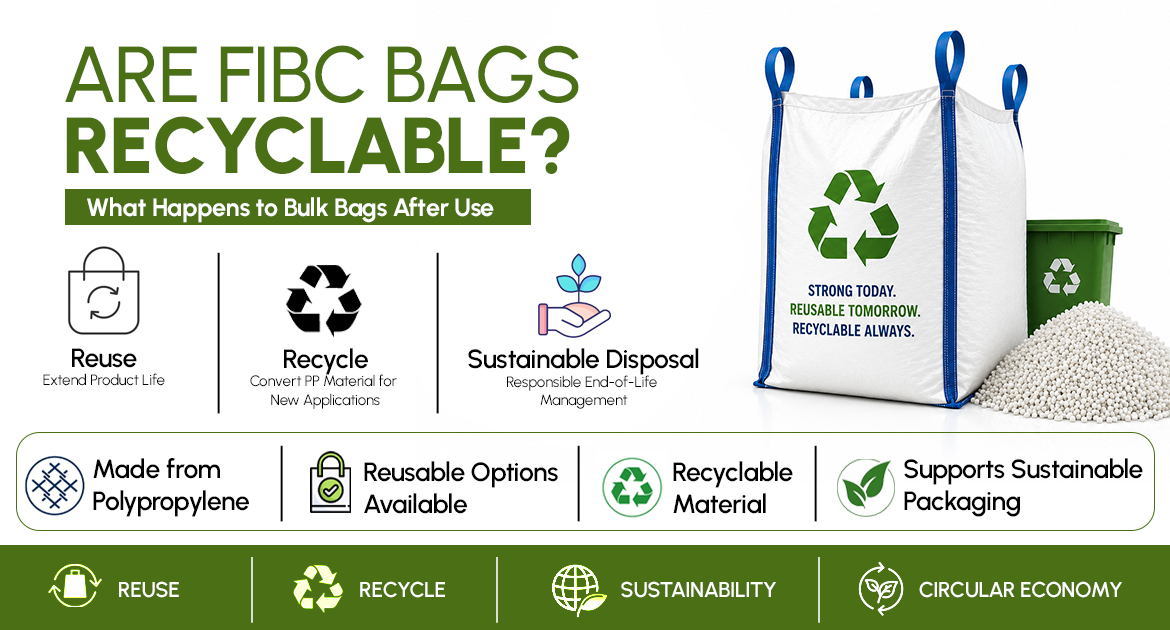
In general, yes, FIBC bags are recyclable.
Since most FIBC bags are manufactured from polypropylene, the material can often be processed and recycled into other plastic products. However, recyclability is not determined by material type alone.
Several factors influence whether a used bag can successfully enter a recycling stream.
One important consideration is material separation. Recycling facilities often prefer materials that are clean and easy to process. If a bag contains multiple components or different materials that cannot be separated easily, recycling may become more complicated.
Another factor is local recycling infrastructure. Recycling capabilities vary significantly between regions. Some facilities are equipped to handle industrial polypropylene products, while others may not accept them.
As a result, the same type of FIBC bag may be recyclable in one location but not in another.
For businesses, this means recyclability should be viewed as a combination of material suitability and local recycling availability.
Can FIBC Bags Be Reused Before Recycling?
Before considering recycling, it is worth exploring whether a bag can be reused.
Reuse is often considered one of the most practical ways to extend the life of industrial packaging and reduce waste generation.
FIBC bags are generally categorized as either single-trip or multi-trip bags. Single-trip bags are designed for one-use cycles, while multi-trip bags are manufactured to withstand multiple uses under controlled conditions.
Safety factors play an important role in determining intended use.
For example, some bags are designed with a 5:1 safety factor, while others may have a 6:1 safety factor that supports repeated use when proper handling procedures are followed.
However, reuse should never occur without inspection.
Before a bag is used again, it should be checked for signs of wear, damage, contamination, or structural weakness. If there are concerns about the condition of the bag, recycling or responsible disposal may be more appropriate.
When done correctly, reuse can help reduce packaging consumption while improving resource efficiency.
What Factors Affect FIBC Bag Recycling?
Although polypropylene itself is generally recyclable, not every used FIBC bag is suitable for recycling.
One of the most common challenges is contamination.
If a bag has been used to transport chemicals, powders, food ingredients, or other materials, residues may remain inside the bag. These residues can affect recycling processes and may require additional cleaning before recycling becomes possible.
Chemical products often present greater recycling challenges due to the potential presence of hazardous residues.
Food-contact applications can also introduce additional handling requirements depending on local regulations and recycling practices.
The presence of liners can create another obstacle. Some liners may need to be removed and processed separately from the outer bag material.
Mixed materials can further complicate recycling efforts. When different materials are combined within a single product, separation becomes more difficult and recycling efficiency may decrease.
The overall condition of the bag also matters. Bags that are heavily damaged, degraded, or contaminated may not be suitable for recycling.
Understanding these factors helps businesses set realistic expectations regarding end-of-life management.
What Happens to Bulk Bags After Use?
Once an FIBC bag reaches the end of its primary use, several pathways may be available.
The first option is reuse, provided the bag is suitable for additional use and passes inspection requirements.
When reuse is not practical, recycling may be considered. Polypropylene materials can often be processed and converted into other plastic products through industrial recycling systems.
In some cases, industrial recovery processes may be used to recover value from plastic materials that cannot be reused directly.
However, recycling is not always possible. Contamination, material condition, or limitations in local recycling infrastructure may prevent a bag from entering a recycling stream.
When no recovery options are available, responsible disposal may become necessary.
The path a bag follows ultimately depends on its condition, previous contents, and available waste management solutions.
How Businesses Can Improve FIBC Bag Sustainability
Businesses can take several practical steps to improve the sustainability of their FIBC bag usage.
Some useful practices include:
- Selecting durable bags suited to the intended application
- Handling bags carefully to minimize damage
- Reducing contamination wherever possible
- Following proper storage practices
- Exploring reuse opportunities when appropriate
- Working with responsible waste management and recycling partners
These actions can help extend product life and improve the likelihood of successful recycling or recovery.
Sustainability is often influenced as much by how packaging is used as by the packaging itself.
Choosing Sustainable FIBC Solutions
Sustainability starts long before a bag reaches the end of its life cycle.
When sourcing FIBC bags, businesses should consider factors such as product quality, durability, material consistency, and manufacturing standards.
A well-constructed bag may offer better performance, lower product loss, and greater opportunities for reuse compared to lower-quality alternatives.
Businesses should also evaluate whether the bag design matches the intended application. Choosing the right bag from the beginning can improve operational efficiency and reduce unnecessary waste.
Manufacturers such as HPBL produce polypropylene FIBC bags designed for reliable bulk handling across a wide range of industrial applications, helping businesses balance performance with long-term packaging considerations.
Conclusion
FIBC bags are generally recyclable because they are primarily manufactured from polypropylene, a material that can often be processed through industrial recycling systems. However, recyclability depends on several factors, including contamination levels, material composition, bag condition, and local recycling capabilities.
Before recycling, many FIBC bags may also have opportunities for reuse when appropriate safety and inspection requirements are met. By selecting quality packaging, reducing contamination, and considering responsible end-of-life practices, businesses can improve the sustainability of their bulk packaging operations.