


Retail packaging is a key factor in protecting products, ease of handling, and presenting products to customers. For companies that sell agricultural products, food grains, sugar, and other packaged goods, the choice of a suitable bag is not just a matter of choosing a material. The final decision can be affected by packaging strength, printing needs, environmental exposure, and product compatibility.
When your business needs woven polypropylene packaging combined with printed graphics, one option to consider is BOPP bags for retail packaging. BOPP laminated bags are made of woven polypropylene with a further layer of polypropylene, which can be printed with graphic images.
In this article, we will talk about the main properties of BOPP bags, possible benefits, typical uses, and what to consider when buying them for retail packaging.
What Are BOPP Bags?
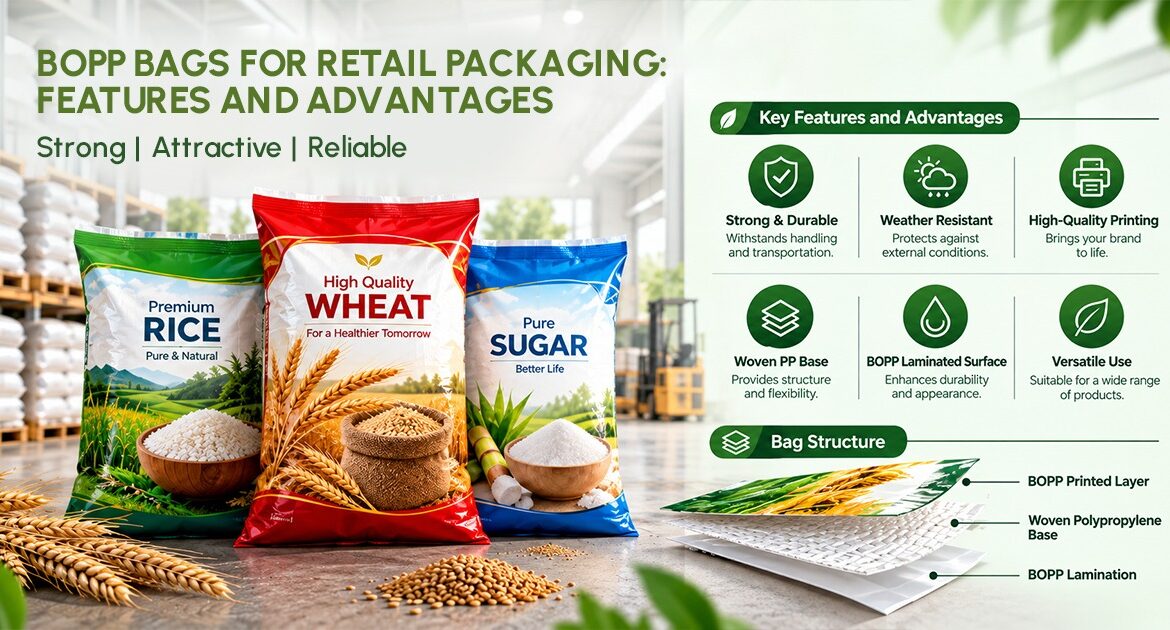
BOPP is an abbreviation for Biaxially Oriented Polypropylene, a polypropylene film material used in packaging applications. BOPP laminated bags are made from woven polypropylene, which forms the structure of the bag, and another layer of polypropylene, which is used for the graphic printing.
The woven base forms the basic packaging structure. The laminated outer layer allows for the presentation of printed designs. According to HPBL’s product documentation, BOPP laminated bags are produced by laminating woven polypropylene with a further layer of polypropylene on which the graphic images are printed. HPBL also describes these bags as durable and with improved weather resistance.
This makes BOPP bags useful for businesses looking for packaging that is both functional and presents the product well. But the exact bag performance depends on construction, materials, and manufacturing specifications.
Key Features of BOPP Bags for Retail Packaging
BOPP bags have a number of qualities that may make them suitable for some retail and commercial packaging applications. Their usefulness depends on the product to be packed and the specifications chosen by the buyer.
Woven Polypropylene Construction
The woven polypropylene base gives structure to the bag. Polypropylene woven packaging is used in a variety of industries because it is strong, flexible, and has handling characteristics that can support a variety of packaging requirements.
The real strength of a BOPP bag is determined by its fabric construction, yarn design, bag dimensions, and the quality of its manufacturing. Therefore, shoppers should check the product-specific strength specifications instead of assuming that all BOPP bags will hold the same weight.
Printed Laminated Surface
One of the main features of BOPP laminated bags is an additional layer used for graphic printing. This allows for the inclusion of product visuals, branding elements, and other packaging information.
The printed surface might be relevant for retail businesses where the packaging has to convey product identity and enable a consistent visual presentation. The printing options and results attainable are dependent upon the provider’s manufacturing and printing capabilities.
Durability and Weather Resistance
HPBL says BOPP laminated bags are more durable and have better weather resistance. These characteristics are helpful for products that are exposed to handling and certain environmental conditions.
Weather resistance, however, should not be taken as full protection from moisture, sunlight, or all outdoor conditions. Buyers should confirm the relevant properties of the selected bag, including whether additional protection is required for the product and intended storage environment.
Advantages of BOPP Bags in Retail Packaging
Where packaging function is needed and product presentation is also important, BOPP bags can provide practical benefits. The importance of each benefit varies according to the product category, packaging design, and supply requirements.
1. Improved Product Presentation
Retail packaging is often a way for a product to communicate with its customer. Printed BOPP bags have graphic designs, product-related information, and brand elements printed on the outer surface.
This can help businesses to maintain a consistent packaging appearance across product ranges. Packaging design might also have a role in how information is given to buyers of products shown in retail environments.
The visual result depends on the printing process, artwork, surface design, and quality controls used in manufacturing. As such, print samples or approved artwork should be checked where required.
2. Support for Handling Requirements
BOPP bags have a woven polypropylene base that can give useful structural properties for packaging and handling. Polypropylene woven bags are used in applications involving products such as agricultural materials, sugar, chemicals, and food grains.
The design of a particular BOPP bag and the needs of the packaged product are what determine its suitability. Please consider bag strength, filling method, transportation conditions, and expected handling loads before ordering.
3. Considerations for Environmental Exposure
Packaging can be exposed to changing conditions during transportation, storage, and distribution. HPBL notes that one of the features of its BOPP laminated bags is better weather resistance.
This may be relevant for businesses that need packaging for products handled in varying environments. Nevertheless, the level of protection depends on the actual bag construction and conditions of use.
Moisture sensitivity, prolonged sunlight exposure, storage arrangements, and packaging requirements should be reviewed individually. A laminated surface does not automatically guarantee complete resistance to every environmental condition.
4. Integration of Packaging and Branding
Businesses selling products through retail and distribution channels may need packaging that combines practical handling with visual identification. BOPP laminated bags provide a format in which printed graphics can be incorporated into the packaging surface.
This can be useful for businesses managing product ranges that require consistent designs or product-specific artwork. The choice should still be based on packaging functionality, print requirements, and the characteristics of the product being packed.
Where Are BOPP Bags Used in Retail Packaging?
BOPP laminated bags can be applied for special products where woven packaging and visual appearance are important. Their suitability is determined by the physical characteristics of the product, packaging requirements, and applicable regulations.
They can be used for packaging of agricultural products, sugar, food grains, and other dry goods where the bag design is as per required specifications. “HPBL’s documented information shows that woven polypropylene packaging is used in multiple sectors like agriculture, sugar, food grains, chemicals, and fertilizers.
However, not all BOPP bags are suitable for every group of products. Packaging selection considerations include food-contact requirements, moisture barriers, filling conditions, and product compatibility.
The requirements of the target market should also be taken into account for foreign buyers. Packaging regulations and related documentation may vary according to the product and the country of import.
BOPP Bags vs Other Retail Packaging Options
Businesses have many packaging formats to choose from, including BOPP laminated bags. Whether it is BOPP bags, traditional woven bags, paper packaging, or other types of packaging will depend on the intended use.
An unlaminated woven bag is a bag made from woven polypropylene. A BOPP laminated bag is a bag with a printed polypropylene layer to support graphic presentation. But the difference in real-world performance depends on the exact materials and construction of each product.
Other packaging formats may be considered when different requirements apply, for example, specific moisture barriers, product visibility, filling process, or retail presentation needs.
No packaging format is right for all products. Before choosing, buyers should consider the properties, packaging costs, regulatory requirements, and intended handling conditions.
How to Select BOPP Bags for Retail Products
Choosing the right BOPP packaging bag is more than just appearance. Businesses need to ensure the bag meets the product’s functional needs and its retail packaging goals.
Here are some things to think about before ordering:
- Compatibility: Ensure that the bag is appropriate for the product being packed, including any applicable food-contact or regulatory requirements.
- Bag specifications. Check dimensions, strength, construction, and filling requirements as necessary for the application.
- Printing requirements: Artwork, graphic quality, design consistency, and printing specifications should be discussed with the supplier.
- Environmental protection: Verify that the product is protected from moisture, sunlight, or other conditions of exposure.
- Quality documentation: Ask for technical specifications and test documentation where appropriate.
- Transportation and storage: Think about what the supply chain expects in terms of handling.
International procurement teams should communicate their product and packaging requirements clearly before production begins. Samples, approved specifications, and documented quality checks can help ensure that the selected packaging is aligned with the intended application.
Conclusion
BOPP bags for retail packaging use a woven polypropylene structure with an additional polypropylene layer for graphic printing. Their features can make them relevant for businesses that need packaging with functional characteristics and a printed presentation.
Potential advantages include presentation, assistance with handling requirements, and documented weather resistance properties. However, the suitability of a BOPP bag depends on its construction and compatibility with the product, environment, and technical specifications.
International buyers should be clear about the product requirements, printing needs, applicable regulations, and supplier documentation to make the right packaging selection. Good packaging decisions must be based on proven specifications and the intended use of the bag.