


FIBC bulk bags are extensively used for the storage, handling, and transportation of dry bulk material. However, standard bulk bags may not be suitable for the application if the product being transported is considered to be dangerous goods.
In such cases, companies may require packaging that complies with specific United Nations regulations for the transport of hazardous materials. These requirements include packaging design, construction, testing, approval, marking, and documentation.
For the buyer, knowing when to use UN-certified FIBC bags and what that certification means can help prevent missteps in packaging choices. The requirements must always be considered in relation to the material being transported, its classification, the intended mode of transport, and the applicable regulations.
What Are UN-Rated FIBC Bags?
“UN-rated FIBC” is a frequently used term for a FIBC that has been manufactured and tested to meet the relevant UN requirements for the transportation of some dangerous goods.
Please be aware that not all FIBCs are UN-certified bags. The purpose of UN-certified packaging is for use in applications for which the transport of dangerous goods is required. Standard FIBCs are widely used for conventional bulk materials.
The UN Model Regulations set out requirements for the classification of dangerous goods, and for the design, testing and approval of packaging and intermediate bulk containers.
The selection of a UN FIBC therefore starts with an understanding of the material being packed and the regulatory requirements applicable to its transport.
When Are UN-Certified FIBCs Used?
Non-UN-certified FIBCs are usually considered when the transported material is classified as dangerous goods, and the regulations in force allow or require the use of this type of packaging.
This may be some powders, granules, chemicals, or other materials which are controlled for transport as dangerous goods. However, just because a product is a chemical or potentially hazardous does not automatically mean that a UN FIBC is required.
Requirements may be based on the material’s UN number, hazard classification, packing group, quantity, and method of transportation. Therefore, the relevant dangerous goods regulations and packing instructions should be checked before selecting the packaging.
This is especially true for international shipments, since requirements may vary depending on the transportation regulations that apply.
How Are UN FIBCs Tested?
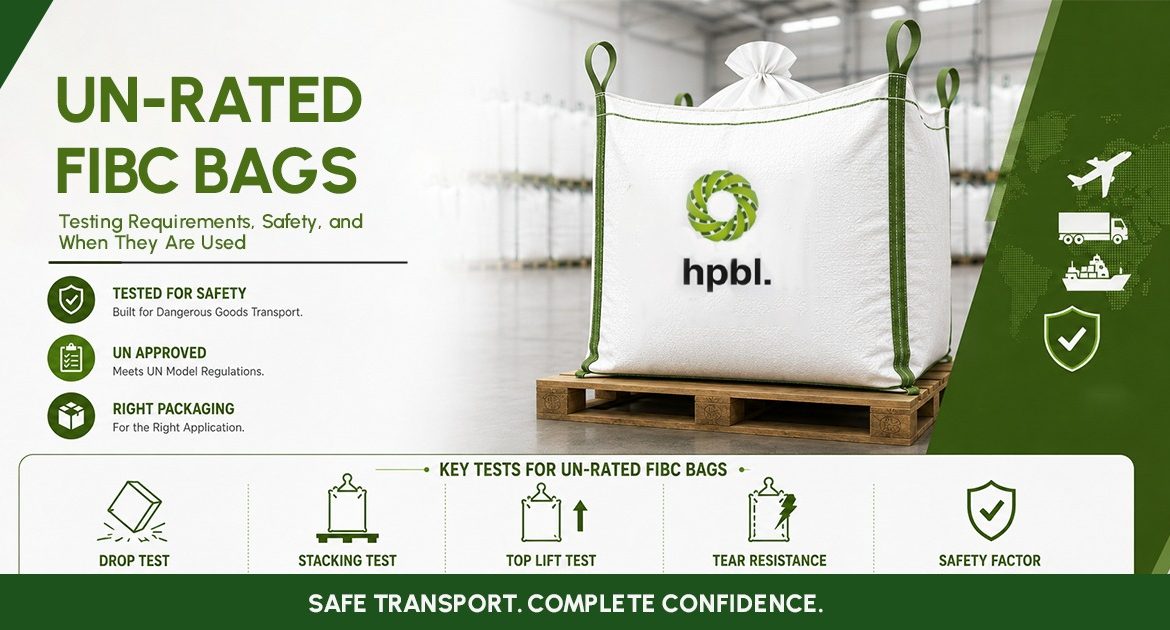
Packaging not UN certified shall be tested to appropriate performance standards. These tests are intended to demonstrate that the design of the packaging is capable of withstanding conditions that may be experienced during normal handling and transportation.
Testing may cover areas such as, depending on the applicable packaging specification and requirements:
- Drop efficiency
- Performance stacked
- Lift Performance Top
- Resistance to tearing
- Other performance checks required
The same testing program is not to be assumed the same for every FIBC. It is contingent upon the packaging design, material, applicable UN specification and relevant regulatory requirements.
The UN requirements are not only associated with the strength of the bag, but also with its performance in retaining the contents and remaining suitable for the conditions of transport for which it is intended. The UN Model Regulations establish requirements for the construction, testing, and approval of packaging and IBCs used for dangerous goods.
This is why a manufacturer or buyer should establish the applicable specification before production rather than simply requesting a bag described as “UN-rated.”
Understanding UN FIBC Certification and Markings
Testing and certification are closely related, but they are not the same thing.
A UN packaging approval is a type of packaging design that has been found to meet the applicable performance requirements. The resulting package is then marked with the required UN marking system.
The marking should not be seen in isolation by buyers. The packaging specification, approval information, test documentation, and intended application must be consistent with each other.
It’s also important to understand that a UN marking does not mean that the FIBC can be used for every dangerous substance. The approved packaging must be appropriate for the relevant application and the requirements related to the material to be transported.
The UN Model Regulations specifically address the use, construction, testing, and approval of packaging and intermediate bulk containers as part of the dangerous-goods transport framework.
UN FIBCs vs Standard FIBCs
The main difference between a standard FIBC and a UN-certified FIBC is more than just one being stronger than the other.
Standard FIBCs are often used for bulk materials where the packaging requirements that apply do not require UN certification. They can be constructed to suit load capacity, product characteristics, method of handling, filling and discharge requirements, and environmental conditions.
UN-certified FIBCs are, however, subject to certain dangerous goods packaging requirements and must satisfy the relevant performance and approval requirements.
Using a UN FIBC where one is not required can add unnecessary complexity, and using a standard FIBC where UN-approved packaging is required can create a serious compliance problem. It follows that the choice of packaging should be determined by the actual transport needs.
What Should Buyers Check Before Ordering UN FIBCs?
Buyers should identify the requirements with the appropriate packaging and dangerous-goods specialists before ordering UN-certified FIBC bags.
Key things to check are:
- UN number and hazard class of the substance
- Applicable packing group and packing instruction
- Required FIBC specification or type of packaging
- Load Capacity Required and Desired Filling Weight
- Relevant test and approval documentation
- Filling, discharging, lifting, liner and other construction
These details must be agreed upon before production begins. A change in the material, how the bag is built, or what it is used for can determine if the packaging chosen is still appropriate.
Buyers should also check that the certification and marking match the actual packaging supplied, and not just a generic statement that the manufacturer makes UN bulk bags.
Why Product Compatibility Still Matters
UN certification does not imply that a FIBC is suitable for use with any hazardous material.
Packaging selection remains an important consideration for the product itself. The chemical properties, particle size, flow properties, moisture sensitivity, and interaction with packaging materials can affect the proper design.
UN Model Regulations state that packaging materials shall be compatible with the dangerous goods contained therein, and shall take into account situations in which the goods might react with or appreciably weaken the packaging.
Some applications may also require additional protection of the product. For example, a suitable liner may be considered when additional moisture, chemical resistance, anti-static, anti-seepage, or other performance characteristics are desired.
Thus, the correct packaging should satisfy regulatory requirements and the practical requirements of the product.
How HPBL Can Support FIBC Packaging Requirements
The first step to choosing the right FIBC is understanding the material and the conditions in which the bag will be used.
HPBL’s documented product portfolio includes FIBC bags for storage, transport, and handling of dry granular and/or slurry materials. Depending on the application, the company also offers FIBC liners that can add properties like anti-seepage, moisture barrier, oxygen barrier, chemical resistance, anti-static performance, and strength.
For applications where regulated or hazardous materials are involved, the purchaser should provide the appropriate product classification and transportation requirements to the packaging supplier before finalizing the bag specification.
This makes it possible to evaluate the FIBC construction, load requirements, liner needs, and other applicable features against the intended application.
Choosing the Right UN FIBC
Selecting a UN-certified bulk bag should not start with the bag. It should start with the material and the transportation needs.
Once the product classification and the relevant regulations are known, the buyers have to find out whether UN-approved packaging is needed and the packaging specification to be used.
Then the manufacturer should get clear information about the product, capacity required, filling and discharge system, lifting arrangement, liner or coating requirements, testing or certification requirements, etc.
Early clarification can assist in avoiding circumstances where bags are produced to an inappropriate specification and are subsequently found not to be suitable for the intended shipment.
Conclusion
UN-rated FIBC bags are intended for use in the transport of dangerous goods in specific applications and must meet the applicable requirements for packaging design, testing, approval and marking.
Most importantly, the buyer needs to determine the requirements of the material and the transportation route before ordering. Do not select a UN-certified FIBC simply because the product is a chemical or is considered hazardous.
Grasping the related classification, packing prerequisites, testing, certification, and product compatibility can help businesses to pick a FIBC that is suitable for their intended purpose. Early collaboration with the manufacturer during the procurement process can also help ensure that the final bag specification accounts for the regulatory and operational requirements of the application.