


The chemical industry involves everything from powders and granules to special compounds used in the manufacturing process. These materials are often stored and transported in large quantities while maintaining safety, product quality, and operational efficiency.
Here is where the importance of FIBC bags comes into the picture. Also known as bulk bags or jumbo bags, they provide a practical solution for handling large quantities of chemicals and make storage and transportation a simple task.
Not all FIBC bags are suitable for every chemical application, however. The right bag should be chosen according to the properties of the material, handling requirements, and safety considerations. Chemical compatibility between the packaged material and the polypropylene packaging system should always be evaluated before selection.
Knowing what to look for helps businesses reduce risks, protect products, and improve overall supply chain performance.
Why the Chemical Industry Relies on FIBC Bags
Chemical manufacturers and distributors move large volumes of materials through the supply chain. Use of small bags or containers may increase handling time, storage requirements, and transportation costs.
FIBC bags are an efficient alternative that allows you to pack a large quantity of product into a single container.
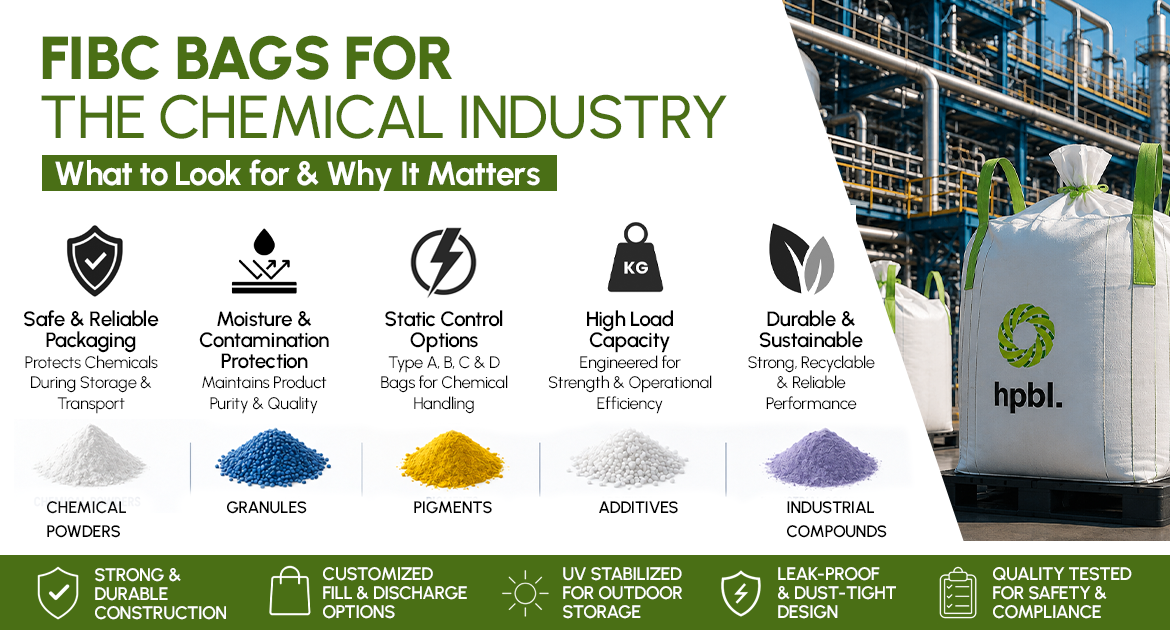
The solution has a high load capacity, streamlining operations and reducing packaging waste. They can also be adapted to specific handling processes by choosing different filling and discharge options.
Flexibility is another advantage. FIBC Bags are used for a wide range of chemical products such as powders, granules, pigments, additives, and industrial compounds.
Lightweight and easy to handle, they enhance efficiency without compromising the protection of the product.
Key Risks When Packaging and Transporting Chemicals
Chemical products often need extra protection compared to many other bulk materials.
Moisture exposure can impact product quality and performance. Some chemicals may react to environmental conditions, so proper packaging is essential.
Another thing is contamination. Even minor amounts of foreign material can impact product consistency, especially in sensitive industrial applications.
Static electricity can also cause problems in handling some powders and chemicals. It is important to control static in environments where combustible dust may be present for safety reasons.
Another risk is leakage. Fine powders can escape through weak points in packaging, resulting in product loss and housekeeping problems.
When choosing packaging for chemical products, businesses should take into account:
- Moisture sensitivity
- Contamination hazards
- Static electricity issues
- Weight and density of the product
- Storage requirements
- Transport requirements
Understanding these factors helps ensure that the selected FIBC bag meets the specific needs of the application.
Important Features to Look for in Chemical-Grade FIBC Bags
Not all bulk bags are designed for chemical use. Some features can make a big difference in terms of safety and performance.
The quality of the fabric is one of the most important factors. Woven polypropylene fabric offers strength and resists many environmental conditions common during transit and storage. Polypropylene offers excellent resistance to many acids, alkalis, and industrial chemicals; however, compatibility should always be verified for aggressive chemicals and solvents.
Additional protection against moisture or product leakage is often provided with coated fabrics.
The Safe Working Load (SWL) should also be carefully considered. The bag shall be capable of holding the specified product weight without overloading its rated capacity.
UV stabilisation may be useful if bags are exposed to sunlight during storage or shipping. This helps to preserve the quality of the fabric over time.
Dust-proof construction is a further useful feature, especially when working with fine powders. A good bag design helps to reduce product loss and create a cleaner work environment.
Fill and discharge systems should also be suitable for operational needs. The proper choice of spouts, closures, and discharge options can improve handling efficiency and reduce the risk of contamination.
Understanding Type A, B, C, and D FIBC Bags for Chemical Applications
Static electricity is one of the most important considerations when selecting FIBC bags for chemical products.
FIBC bags are classified into four categories according to different handling environments. Understanding the differences between Type A, Type B, Type C, and Type D FIBC bags can help businesses choose the most suitable option for their specific chemical handling requirements.
Type A bags are made from standard woven polypropylene and do not offer static protection. They are commonly used with non-flammable materials where there are no electrostatic hazards.
Type B bags are manufactured from low-breakdown-voltage fabric, reducing the occurrence of propagating brush discharges. They are often used for handling certain dry combustible powders.
Type C bags are conductive bags and must be properly grounded during the filling and discharge operations. When used properly, they help prevent dangerous static buildup.
Type D bags are designed to dissipate static electricity and do not need to be grounded. Type D bags safely dissipate static charges into the atmosphere through specially engineered antistatic yarns and coatings, eliminating the need for grounding when used correctly. These bags are often used where additional electrostatic protection is required.
Choosing the correct bag type depends on the material being handled and the conditions present within the operating environment. The presence of flammable vapours, gases, or combustible dust should be assessed before selecting the appropriate FIBC type.
Why FIBC Liners Matter for Chemical Packaging
Many chemical applications require an extra layer of protection.
That is where FIBC liners come in handy.
Liners are placed inside the bulk bag and help to form a cleaner barrier between the product and the outside environment.
They can help to reduce exposure to moisture, improve control over contamination, and prevent product seepage. This is especially important in the handling of fine powders or delicate chemical products.
There are different liner options available depending on the requirements of the application. Common choices include form-fit liners, loose liners, conductive liners, aluminium foil liners, and EVOH barrier liners. Some are designed to improve moisture protection, while others focus on containment, static control, or enhanced barrier performance.
Liners provide an extra level of security, helping to keep products at their best while in storage and during transportation.
How to Choose the Right FIBC Bag for Your Chemical Product
The first step in choosing the right FIBC bag is to know the material being packed.
Powders, granules, and specialty chemicals may need different bag designs, discharge systems, or safety features.
Businesses need to consider whether the product is moisture sensitive, has contamination issues, or has electrostatic risks. Hazardous chemicals intended for transport may require UN-certified FIBCs compliant with applicable dangerous goods regulations. Additionally, consider the storage and transportation conditions before deciding.
Load capacity matters just as much. The selected bag must have the appropriate Safe Working Load and the safety factor to suit the application.
For organisations with unique needs, working with experienced manufacturers can help ensure the bag design meets the operational needs. Companies such as HPBL provide customised FIBC solutions that can be customised for different chemical handling applications, with a strong focus on quality and safety.
Conclusion
The packaging needs of the chemical industry require solutions that ensure product protection, safe handling, and operational efficiency. FIBC bags are still a trusted option due to their ability to hold large amounts and the flexibility to use them in various chemical applications.
Businesses can choose the FIBC solution that is best suited to their needs by understanding factors such as material compatibility, static protection, liners, load capacity, and bag construction. The right choice reduces risk, enhances performance, and enables a more dependable supply chain.