


FIBC bags are used in industries such as agriculture, food processing, chemicals, construction, and mining for the safe storage, handling, and transportation of bulk materials. During their lifetime, these bags are subjected to lifting, stacking, loading, unloading, and transportation under a variety of operating conditions.
To perform reliably, FIBC bags must be properly tested before being put in service. Standardized testing ensures that a bag can withstand the stresses it was designed for, while maintaining structural integrity and safe working performance.
Testing also gives businesses greater confidence in the bulk packaging solutions they choose. To help ensure consistent product performance and reliability, manufacturers such as HPBL utilize quality control and testing procedures during the manufacturing process.
Why FIBC Bag Testing Is Important
Looking at a FIBC bag does not tell you if it will work safely in real use. Visual inspections can catch obvious manufacturing defects, but cannot tell you how a bag will perform under heavy loads, repeated handling, or during transport.
Testing ensures that the bag can safely support its intended Safe Working Load (SWL) and that it will perform under normal operating conditions. It also allows manufacturers to test the strength of lifting loops, fabric construction, seams, and overall bag design before the products make it into the hands of customers.
The majority of FIBC bags are made and tested to internationally accepted standards, such as ISO 21898. These standards are used to set uniform testing procedures and performance requirements in the industry.
For buyers, properly tested packaging can reduce operational risks, improve workplace safety, and support reliable handling throughout the supply chain.
Common FIBC Bag Testing Methods
Top of Lift Test
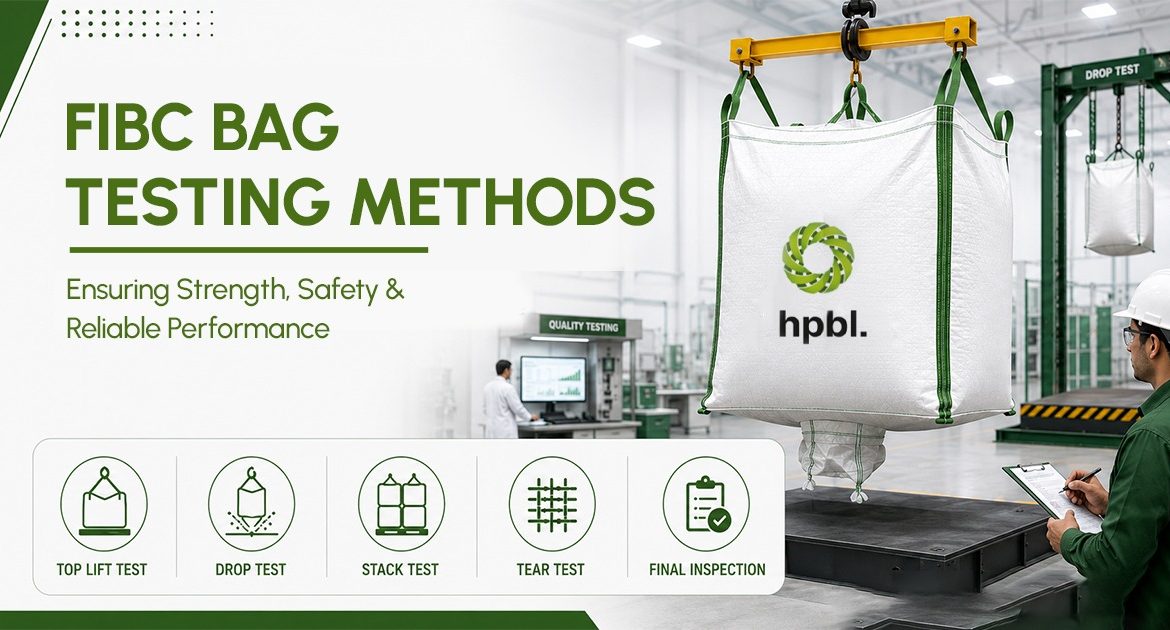
The Top Lift Test is one of the most important structural tests performed on a FIBC bag.
During this test, the filled bag is lifted by its designated lifting loops whilst carrying its rated Safe Working Load. The bag is suspended for a period of time to ensure the lifting loops, seams and overall construction can safely support the intended load without structural failure.
Lifting is one of the most frequent handling operations performed during the life cycle of an FIBC, therefore, this test is critical to verify the overall strength and reliability of the bag.
Drop Test
Drops may occur accidentally during loading, unloading, or transportation. The Drop Test tests the ability of a FIBC bag to withstand such impacts.
The bag is filled as required by the relevant testing requirements and dropped from a specified height under controlled conditions. After the drop, the bag is inspected for any tears in the fabric, failed seams, leaks, or other structural damage that could compromise safe handling.
Successfully passing this test shows that the bag is more resistant to the unexpected handling conditions that are often found throughout the supply chain.
Stacking Test
Many bulk materials are stored in piles, in warehouses or storage areas, for long periods of time before they are used or shipped.
The Stacking Test is a test to assess a FIBC bag’s ability to support additional loads when bags are stacked in a vertical stack. The test conditions simulate the actual storage conditions using controlled loads.
This evaluation guarantees the bag will keep its structure without major deformation or damage, allowing for safer storage in warehouses and efficient logistics handling.
Tear Test
FIBC bags are exposed to abrasion, pulling forces, or accidental contact with equipment in the normal course of handling.
The Tear Test measures the resistance to tear of the woven polypropylene fabric and stitched construction under load. Its high tear resistance helps prevent package damage, product leakage, and material loss during handling and transport.
This test also helps evaluate the overall durability of the bag throughout its intended service life.
Righting Test
Filled FIBC bags can sometimes tip over during handling or storage.
The Righting Test is designed to determine if a filled bag can safely resist the stresses involved in returning it to an upright position after it has tipped over. The bag is then carefully righted using approved lifting equipment, and the inspectors check the structural integrity and overall performance.
This test helps to ensure the bag can withstand handling scenarios that might occur during normal warehouse or transportation activities.
Additional Application-Specific Tests
Depending on customer requirements, product characteristics, or transportation conditions, additional evaluations may be performed.
This may involve vibration testing for long-distance transportation, UV performance testing for outdoor storage applications, fabric property testing, dimensional verification, and complete visual inspections before dispatch.
Not every FIBC bag requires every available test. The testing program is typically determined by the intended application, customer specifications, and applicable industry standards.
How Testing Supports FIBC Safety Standards
Testing and safety standards go hand in hand to help ensure reliable FIBC performance.
Each testing method is different and is intended to verify that a bag can safely meet its specified Safe Working Load (SWL) and applicable Safety Factor requirements in a controlled environment. They also ensure that the bag is suitable for lifting, storing, transporting, and handling during its intended use.
For companies needing a more detailed understanding of these requirements, learning about FIBC safety standards can give further insight into Safe Working Load, Safety Factors, UN certification, and the testing procedures commonly used within the bulk packaging industry.
Manufacturers can provide safe and reliable bulk material handling packaging solutions with the help of standardized testing and established safety requirements.
Quality Control Beyond Testing
Testing is just one part of producing reliable FIBC bags. Consistent quality control during manufacturing is equally important.
Quality assurance begins with inspection of raw materials before production starts. It includes weaving, cutting, stitching, assembly, and final inspection to help ensure product consistency from one production batch to another.
Many manufacturers also have traceability systems that record production data such as material lots, dates of manufacture, operator logs, and quality inspection results. They promote product consistency and increased transparency throughout the manufacturing process.
Manufacturers can help to ensure consistently performing FIBC bags in a wide range of industrial applications through the combination of systematic quality control and appropriate testing procedures.
Choosing a Manufacturer That Prioritizes Testing and Quality
Choosing an FIBC supplier is more than just comparing product specs. Buyers should look at the manufacturer’s overall approach to quality assurance and testing.
When choosing a supplier, ask if they offer:
- Documentation of quality control procedures
- Product testing practices standardized
- Traceability systems in production
- Reliable manufacturing processes
- Personalization options
- Technical support for specific application needs
- Reliable production capacity, delivery performance
Companies like HPBL are focused on structured manufacturing processes, quality control measures, and testing practices to ensure reliable bulk packaging solutions for a variety of industrial applications.
Conclusion
Testing of FIBC bags is critical to ensure that bulk packaging solutions are safe, durable, and perform well before they are put into service. Tests like the Top Lift Test, Drop Test, Stacking Test, Tear Test, and Righting Test help to assess the performance of bags under the handling conditions that they are supposed to endure.
But testing isn’t enough. Reliable FIBC bags are made in consistent manufacturing processes with effective quality control and proper traceability to help ensure safe storage, transport, and material handling.
By selecting manufacturers that focus on testing as well as quality assurance, businesses can improve operational reliability and help ensure that their bulk packaging performs consistently throughout the supply chain.