



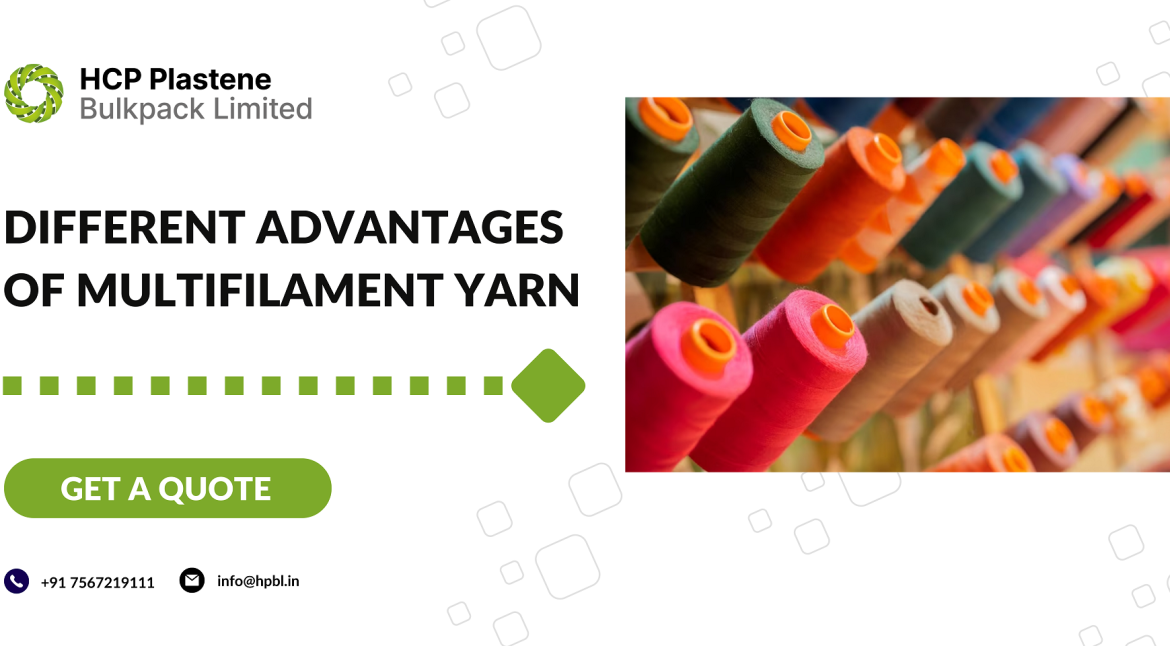
A continuous string of textile fibres, filaments, or material that is appropriate for knitting, weaving, or other methods of interlacing to create a fabric is referred to as yarn.It is a crucial component of the packaging sector because, like the nerves that hold the human body together, this yarn provides the product it is employed in shape, form, and existence. It is produced utilising threads, often referred to as filaments. Following the extrusion of the filament, the yarns are spun on machines hence the name Multifilament yarn. The multifilament threads’ small diameter and extremely low bending stiffness help the yarn’s flexibility. The density of these filaments is measured in units.
Multifilament yarn which is also known as continuous filament is made out of a collection of monofilaments that have minimal twists to give the structure coherence. As an alternative, entanglement or intermingling can hold multifilament fibres together. The tight packing of multifilament yarns is prevented by a non circular cross-section. Fully drawn yarns with a high tenacity that are produced using extrusion spinning. They immediately follow through an annealing zone by being extruded, chilled, stretched, and wound on winders.
Benefits of Using Multifilament Yarn
Swimwear, rugs, and even ropes may all be made using the famous PP multifilament yarn! Additionally, it works effectively for textile materials like upholstery. Higher breaking strength, improved abrasion resistance, superior water absorption capabilities, superior flex fatigue resistance, decreased cost compared to fibres like nylon or polyester, and excellent thermal insulation qualities are just a few advantages of adopting this type of fibre. It may also be coloured to your preferences, giving your items a distinctive appearance. Some of the notable benefits of using Multifilament Yarn are:
1. Multifilament has a higher modulus and better strength than its counterpart because it can be pulled more efficiently.
2. In comparison to monofilaments, MFY is significantly more flexible.
3. Comparing structured cross-sections with larger bulk to multifilament yarn with round filaments, the packing percentage of the former is higher.
4. MFY is resilient, low gravity, stain-proof, and long-lasting.
Applications for Multifilament Yarn
Multifilament yarn is commonly used in a variety of applications. It is frequently used in spas and swimming pools, as well as for kayaks and canoes and other water sports gear. Due to its exceptional abrasion resistance, it may also be utilised to make athletic and protective clothing. Other frequent uses include carpets, ropes, upholstery fabrics, and textiles used in furniture and automotive and industrial items. FIBC Stitching, PP/ HDPE Woven sacks, Geo Textiles, Making of Geo-Synthetic Fabrics, Outdoor covers, Horse Rug Fabric, Rug Webbing etc are some of the major applications of multifilament yarn.
Choosing the right Multifilament yarn
There are a few aspects you should take into account while selecting the best multifilament yarn for your application. First, understand the yarn’s needed characteristics and confirm that it can provide those features. Second, confirm that the production procedure is ecologically responsible and sustainable. Finally, take into account cost and supply; various multifilament yarn varieties may have varying costs or possibly be in short supply from the yarn manufacturing companies in India
How to maintain your Multifilament yarn
For anything to last longer, it must be properly maintained and taken care of. Your multifilament yarn in the same way must be properly maintained and cared for in order to remain in excellent condition. This includes routine cleaning, airing out before use, and defence against UV and heat. Multifilament yarn should also be handled carefully when connecting to other materials since it can get weaker if twisted or tied too tightly. These kinds of safety measures can help your multifilament yarn last longer.
At HPBL, we emphasise quality at every step of the production process. Our team of experienced professionals ensures that our multifilament yarns adhere to the highest standards. We use advanced technology and premium raw materials to create durable, tear-resistant, and long-lasting products that meet our customers expectations.
To maintain multifilament yarns in excellent condition, regular cleaning, proper handling, protection against UV and heat, and avoiding excessive twisting or tight tying are essential. Following these maintenance practices will help prolong the lifespan of multifilament yarns and ensure their optimal performance.
Choose HPBL as your trusted partner for all your multifilament yarn needs. Contact us today and experience our commitment to delivering high-quality products and exceptional customer service.
Exploring the Strengths of Multifilament Yarn
Multifilament yarns are highly sought-after due to their versatility, strength, and performance across various industries. Whether it’s packaging, textiles, or technical applications, these yarns offer multiple advantages that make them a preferred material for manufacturers and end-users alike. Here’s a deeper look at the key advantages that make multifilament yarn stand out.
Superior Durability and Strength
One of the most notable advantages of multifilament yarn is its impressive strength-to-weight ratio. Made from multiple fine filaments twisted or entangled together, these yarns can withstand high levels of stress and strain. This makes them ideal for applications where strength and resilience are critical, such as in FIBC stitching, ropes, industrial belts, and geotextiles. Their high tenacity ensures durability even in demanding environments.
Enhanced Flexibility and Softness
Compared to monofilament yarns, multifilament yarns are significantly more flexible. This flexibility allows them to be used in products where softness and pliability are necessary, such as in furnishing fabrics, rugs, and garments. The fine, numerous filaments create a smooth texture that’s comfortable to the touch, making them ideal for both consumer and industrial textiles.
Better Abrasion and Fatigue Resistance
Multifilament yarn is engineered to endure repeated bending, stretching, and environmental exposure without breaking down. This makes it especially useful in applications that involve movement or friction, such as sportswear, upholstery, and outdoor equipment. The yarn’s resistance to flex fatigue helps maintain product integrity over time.
Lightweight Yet High Performance
Despite being lightweight, multifilament yarn does not compromise on performance. It offers low specific gravity, which is particularly advantageous in marine and aerospace applications where weight reduction is crucial. Its lightweight nature also contributes to easier handling and transportation, reducing logistical costs.
Excellent Dyeability and Aesthetic Appeal
Multifilament yarns have superior dye absorption qualities, allowing them to be coloured in vibrant, consistent shades. This is a significant benefit for textile manufacturers looking to produce visually appealing products with long-lasting colour. Additionally, these yarns support a variety of finishes and textures, offering greater design flexibility.
Thermal and Chemical Resistance
PP multifilament yarns are well-known for their resistance to heat and a wide range of chemicals, including acids and alkalis. This property makes them suitable for technical textiles, including industrial filters, protective clothing, and geo-synthetic fabrics. They retain their properties even under harsh operating conditions.
Eco-Friendly Options and Recyclability
With growing demand for sustainable solutions, multifilament yarns are also available in eco-friendly and recyclable variants. At HPBL, we are committed to reducing environmental impact through responsible manufacturing practices and offering yarns that align with sustainability goals. Our production methods are designed to optimise energy use and minimise waste.
Versatile Applications Across Industries
The multifunctional properties of multifilament yarns make them suitable for a wide array of applications, such as:
- Agricultural fabrics and crop covers
- Industrial textiles for filtration and reinforcement
- Marine and outdoor gear including tarps and covers
- Packaging solutions like FIBC bags and woven sacks
This broad utility is a testament to the adaptability and value of multifilament yarn in today’s diverse industrial landscape.