



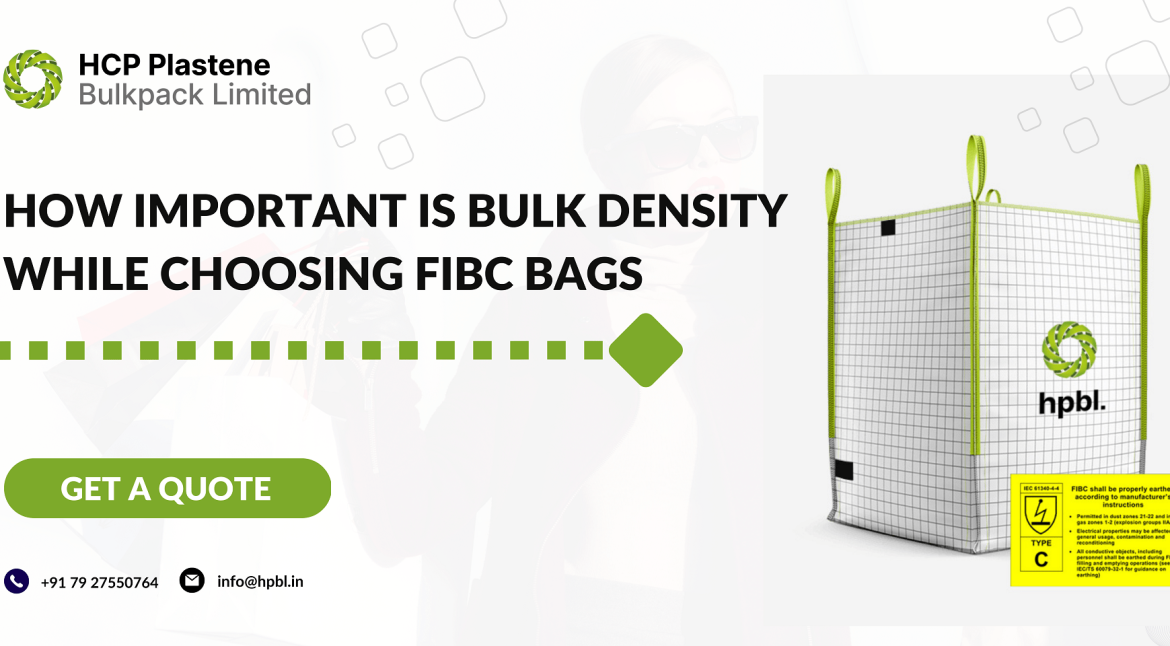
A flexible intermediate bulk container, sometimes referred to as a FIBC bulk bag, is a type of industrial container used for storing and moving dry, flowable goods. Depending on the materials held, a FIBC bags manufacturer in India will create these thick polyethylene bags with a diameter of 45 to 48 inches and a height between 39 and 79 inches. They are ideal for storing and transporting dry bulk commodities due to their flexible walls. They come in a variety of shapes and sizes and you can choose what suits your business.
Along with the size, weight, fabric type, and static protection of your product, you must also pay attention to its bulk density. Particularly for dry commodities that you store in FIBC bags, bulk density can significantly affect packing. The bulk density of your product will have an impact on how smoothly powder and grain pass through the packing machinery. As a result, it affects how the packaging is made and how big the bags are.
What is Bulk Density and how to determine it?
Mass per unit volume of powders or granules in a bulk condition is known as bulk density. Bulk density helps in figuring out how much material or matter you can securely store in a given space, like a FIBC bag. You risk running out of FIBC bags before you can store your goods if you misjudge the bulk density of your products. Even worse, stretched bags might rupture and harm you and your clients.
On the other hand, predicting bulk density too highly will result in estimates of goal weight per bag that are too low and dangerous long-term storage options. Bulk density has an impact on several design decisions. It covers everything from the available discharge choices to the FIBC bags’ total size. It becomes very important to estimate the correct bulk density of FIBC bags so that everything from loading granules to transportation and unloading goes smoothly.
How to choose the suitable FIBC bag according to bulk density?
It might be difficult to get FIBC bags that are appropriate for keeping your items. To make sure the bag fits your desired dimensions and can support the weight of your unique items, you must verify important characteristics like construction type and safe operating load. In order to avoid the issues related to bulk density a good FIBC bags manufacturers in Gujarat will be able to help you out. Also you can follow the below strategies
- To get the weight of the material (in kg) that may be put inside a FIBC bag, multiply the bag’s volume in cubic metres (m3) by the material density in Kg per cubic metre (kg/m3). It helps selecting the appropriate bag size for particular FIBC bag applications.
- For protection against contamination or moisture, choose bulk bags with coatings or liners. The density of the product is also impacted by its exposure to moisture while being stored and transported. Poly liner-equipped FIBC bags assist to lower the danger.
- No matter how dense your product is, you may choose a safety factor when creating your bulk bags to ensure that they won’t be damaged. This option will provide you peace of mind and flexibility to expand in the event that you calculate bulk density incorrectly or make changes to your product’s formula.
- There must be a simple method for emptying the product bag when the time arrives. Make sure you have the opportunity to swiftly remove the product from the bag in emergency situations,as quickly as possible.
HCP Plastene Bulkpack Limited is a leading plastic bag manufacturers in India with a diverse product portfolio comprising of FIBCs, small bags, and multi-layer films. Their FIBC bags are designed and manufactured to meet various industry standards and are suitable for carrying and storing a wide range of dry-flowing materials, including hazardous and non-hazardous items. When it comes to choosing the suitable FIBC bag according to bulk density, HPBL offers a variety of FIBC bags with different specifications to meet the specific needs of their customers. For instance, we offer FIBC bags with different filling and discharge options, lifting loops, and liners, which help to reduce material loss during transportation and handling. We understand that the bulk density of the material being transported is a critical factor in determining the FIBC bag’s capacity. As such, we offer FIBC bags with different capacity options, ranging from 500 kg to 2000 kg, to cater to materials with varying bulk densities. This ensures that our customers can choose the suitable FIBC bag according to the bulk density of their material, thus reducing the risk of material spillage or overloading, which can lead to transportation delays and additional costs.
Choosing HCP Plastene Bulkpack Limited as the suitable FIBC bag manufacturer according to bulk density ensures that customers receive high-quality FIBC bags that are tailored to their specific needs