


Choosing the right packaging solution is essential for any business involved in storing, transporting, or exporting goods. Two commonly used options in industrial packaging are FIBC bags and PP woven bags.
At first glance, they may seem similar since both are made from polypropylene. However, they serve different purposes.
In this guide, we’ll outline the key differences, uses, and advantages of each bag type so you can make the best choice for your business. As a leading manufacturer of FIBC bags and PP woven bags in India, selecting the right packaging can significantly impact your operational efficiency and overall cost.
What Are FIBC Bags and PP Woven Bags?
FIBC bags, also known as jumbo bags or bulk bags, are large flexible containers designed to store and transport bulk quantities of materials. They are widely used in industries such as chemicals, construction, agriculture, and exports.
These bags can carry heavy loads, typically between 500 kg and 2000 kg, and in some cases up to 2500 kg depending on the design. This makes them ideal for bulk packaging and large-scale logistics.
On the other hand, PP woven bags are made from woven polypropylene fabric and are used for packaging medium to large quantities in manageable units. They are lightweight, durable, and commonly used for packaging products like grains, sugar, cement, fertilizers, and other industrial goods.
Both PP woven bags and FIBC bags can be customized in terms of size, fabric type, coating, and printing based on specific industry requirements. These bags are manufactured following industry standards to ensure strength, durability, and safe handling across different applications.
FIBC Bags vs PP Woven Bags: What’s the Main Difference?
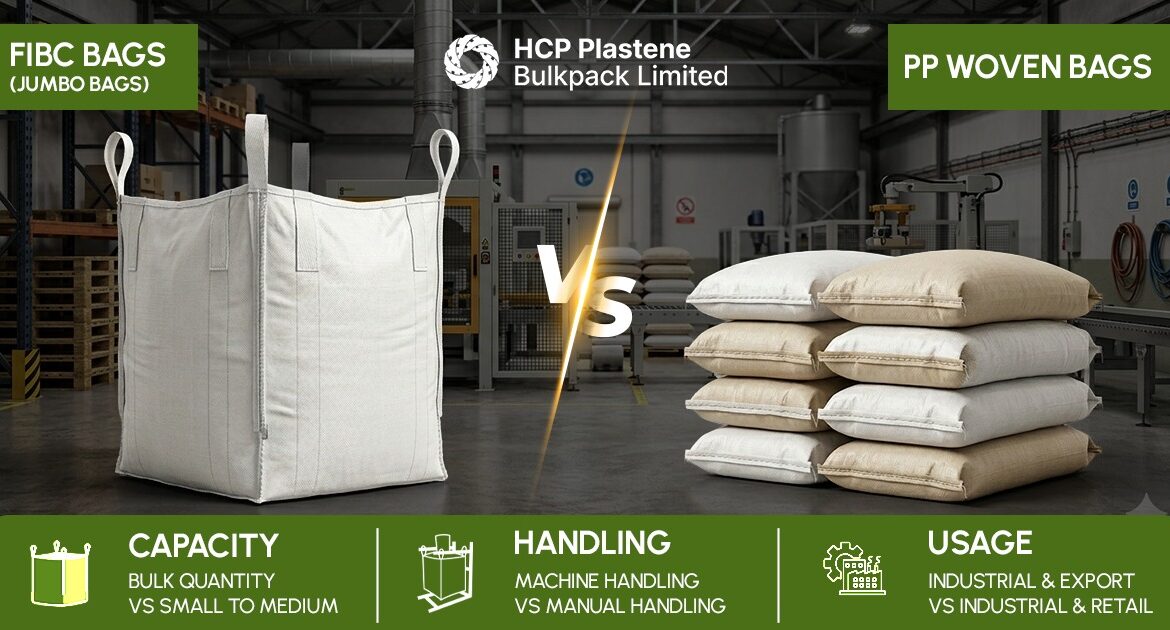
The main differences lie in capacity, usage, and handling.
FIBC bags are designed for large-scale operations. They can hold a substantial amount of material, reducing the need for multiple smaller packages. These bags are typically handled using equipment such as forklifts or cranes.
In contrast, PP woven bags are generally used for smaller, manageable loads compared to FIBC bags. They are easy to carry manually and are commonly used in retail and smaller distribution setups, although they can also be machine-filled and transported.
Here’s a simple comparison:
-
Capacity:
FIBC bags → Bulk quantities
PP woven bags → Small to medium quantities
-
Handling:
FIBC bags → Primarily handled using equipment like forklifts or cranes
PP woven bags → Mostly suitable for manual handling but can also be machine-filled and transported
-
Usage:
FIBC bags → Industrial and export packaging
PP woven bags → Industrial, agricultural, and retail packaging in smaller, manageable units
This difference makes each type suitable for specific business needs.
In addition to these differences, FIBC bags also come with advanced features such as UV protection, anti-static properties (Type A, B, C, and D FIBC bags used for handling different levels of static-sensitive materials), and varying safety factors depending on usage. These technical specifications make them suitable for handling sensitive and hazardous materials.
Where Are These Bags Used?
Both types of bags are widely used in different industries, though their applications vary based on scale.
FIBC bags are commonly used in:
- Chemical, pharmaceutical, and polymer industries
- Construction materials such as sand, cement, and minerals
- Agriculture (seeds, grains in bulk)
- Export and international shipping
They are ideal when large volumes need to be transported efficiently. For example, industries exporting bulk chemicals or agricultural products often rely on FIBC bags to reduce handling time and improve shipping efficiency.
PP woven bags, on the other hand, are used in:
- Food packaging (rice, flour, pulses)
- Fertilizer and animal feed packaging
- Retail and local distribution
- Small-scale storage
If your business handles bulk packaging and logistics, FIBC bags are a better choice. For smaller packaging needs, PP woven bags are suitable.
Pros and Cons of Each Type
Understanding the advantages and limitations of both options can help in your decision-making.
FIBC Bags – Advantages
- Suitable for large-volume storage
- Reduces packaging and transportation costs
- Stackable and space-efficient
- Ideal for export and bulk handling
FIBC Bags – Limitations
- Requires equipment for handling
- Higher initial cost per bag
- Not suitable for small-scale use
PP Woven Bags – Advantages
- Lightweight and easy to carry
- Cost-effective for smaller quantities
- Suitable for manual handling
- Widely available and versatile
PP Woven Bags – Limitations
- Not ideal for bulk transport
- Requires more units for large volumes
- Higher overall logistics cost in bulk operations
Cost and Practical Considerations
When comparing FIBC bags and PP woven bags, cost should not be evaluated based only on price per bag.
FIBC bags may appear expensive initially, but they can carry a much larger load. This reduces the number of bags required, lowers handling costs, optimizes storage space, and improves transportation efficiency. For businesses involved in exports or bulk materials, this often results in a lower cost per ton.
PP woven bags, while cheaper per unit, can increase overall costs when used for large volumes. More bags mean higher labor requirements, additional storage space, and increased transportation effort.
The best choice depends on how you evaluate cost-per bag or per overall operation. It is also important to choose high-quality bags from a reliable manufacturer to ensure safety, consistency, and long-term performance.
Which One Should You Choose?
The right packaging solution depends on your business requirements.
You should consider FIBC bags if:
- You handle bulk quantities
- You are involved in exports or large-scale logistics
- You want to reduce overall packaging and transport costs
You should consider PP woven bags if:
- Your packaging needs are smaller
- You rely on manual handling
- You operate in retail or local distribution
In many cases, businesses use both types of packaging depending on the situation.
Final Thoughts
Both FIBC bags and PP woven bags play important roles in modern industrial packaging. The key is understanding where each option fits best.
FIBC bags are designed for efficiency in large-scale bulk handling, while PP woven bags offer flexibility for packaging in smaller, manageable units across various industries.
Choosing the right option can improve not only your packaging but also your logistics and overall cost efficiency. If you’re unsure which solution is best for your business, it’s important to evaluate your volume, handling processes, and long-term operational needs before making a decision.