


Bulk packaging plays a crucial role in various industries that deal with large quantities of materials such as chemicals, food products, fertilisers, and minerals. One popular option for this type of packaging is FIBC bags, which are often called bulk bags or jumbo bags.
When businesses look for the right packaging, they often wonder whether to choose FIBC bags with liners or without them. Both types are commonly used, but the right choice really depends on the material being handled and the level of protection it requires.
In this article, we’ll break down the key differences between these two types of FIBC bags in a simple and practical way to help you make an informed decision.
What Are FIBC Bags and FIBC Liners?
FIBC bags are large containers made from woven polypropylene fabric, designed to store and transport dry, flowable materials efficiently. They are strong and flexible, making them suitable for a wide range of industries.
An FIBC liner is an inner layer placed inside the bag. It acts as a protective barrier that helps safeguard the material from the external environment. These liners are usually made from polyethylene and are particularly useful when additional protection is required.
In simple terms, the outer bag provides structural strength, while the liner enhances protection.
FIBC Bags Without Liners: Features and Limitations
FIBC bags without liners are often the preferred choice for general-purpose applications where the material does not require extra protection. They are ideal for items like sand, grains, and construction materials.
Some key features of non-lined FIBC bags include:
- Made from strong woven polypropylene fabric
- High load-bearing capacity
- Cost-effective for bulk transport
- Suitable for dry and free-flowing materials
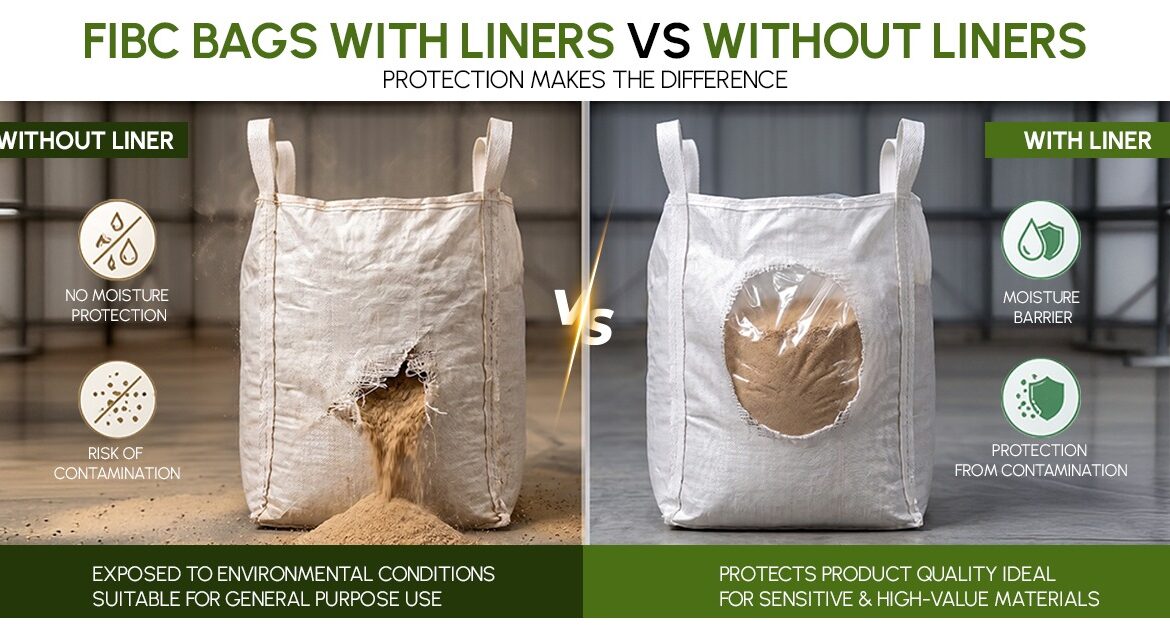
However, it is important to consider their limitations. Since there is no inner barrier, the material inside is exposed to external conditions.
This brings some downsides:
- No protection against moisture or humidity
- Limited resistance to contamination
- Not suitable for fine powders
- Less effective for high-value or sensitive materials
Because of these limitations, these bags are best suited for situations where basic storage and transportation are sufficient.
FIBC Bags With Liners: Features and Advantages
FIBC bags with liners are designed for applications where product safety and quality are important. The liner creates a controlled environment inside the bag, helping protect the material from external factors such as moisture and contamination.
This makes lined bags ideal for industries where product integrity is critical, such as food, chemicals, and pharmaceuticals.
Here are some key advantages of using FIBC bags with liners:
- Protection against moisture and humidity
- Reduced risk of contamination
- Better preservation of product quality
- Improved storage conditions
There are also different types of liners available:
- Form-fit liners that match the shape of the bag
- Loose liners that allow flexibility
- Barrier liners that protect against moisture and oxygen
- Anti-static liners for sensitive materials
These options allow businesses to choose liners based on their specific requirements.
Key Differences Between FIBC Bags With and Without Liners
The primary difference lies in the level of protection each option offers.
FIBC bags without liners are suitable for materials that are not affected by environmental conditions. They provide a simple and cost-effective solution for bulk handling.
In contrast, FIBC bags with liners are designed to protect materials from moisture and contamination, making them more suitable for sensitive or high-value products.
While lined bags may have a slightly higher upfront cost, they can help reduce product loss and maintain quality over time.
When Should You Use FIBC Liners?
The decision to use a liner depends on the nature of the material and the storage or transportation conditions. In general, liners are recommended when:
- The product is sensitive to moisture
- Contamination must be avoided
- Fine powders or granules are being handled
- Long-term storage is required
In these situations, using a liner helps maintain product consistency and reduces the risk of damage.
Benefits of Using FIBC Liners in Bulk Packaging
Adding liners to FIBC bags offers several practical benefits:
- Helps maintain product quality during storage and transport
- Reduces the risk of contamination
- Protects materials from environmental exposure
- Improves handling and discharge efficiency
These benefits highlight the important role liners play in many industrial packaging applications.
How to Choose Between FIBC Bags With and Without Liners
The choice largely depends on your specific packaging requirements. It is important to consider the type of material, its sensitivity, and the conditions it will face during storage and transportation.
If the product is stable and does not require extra protection, standard FIBC bags can be a cost-effective option. However, for materials that require additional safety, hygiene, or a longer shelf life, choosing a liner bag is a better decision.
Making the right choice from the beginning can improve efficiency and help avoid potential losses.
Conclusion,
FIBC bags with and without liners both play important roles in bulk packaging. The key difference lies in the level of protection they provide.
Standard bags are suitable for basic applications, while lined bags offer added safety and reliability for sensitive materials.
Understanding your specific needs will help you choose the right solution. In many cases, using liners can improve product quality and ensure better performance throughout the supply chain.